


How Qubits Work. Quantum computers are among the most exciting technological developments of the 21st century. They promise to solve problems that would take today’s most powerful classical supercomputers thousands of years — or make them practically impossible.
At the heart of these futuristic machines lies the qubit (quantum bit), an entirely new way of representing and processing information based on the laws of quantum mechanics.
This article breaks down how qubits work, what makes them completely different from classical bits, and why they are the engine that could drive the next era of computing.
By the end, you’ll have a clear, up‑to‑date (as of 2026) understanding of qubits — how they operate, how they’re implemented physically, and what challenges researchers are overcoming to make quantum computers truly practical.
What Is a Qubit?
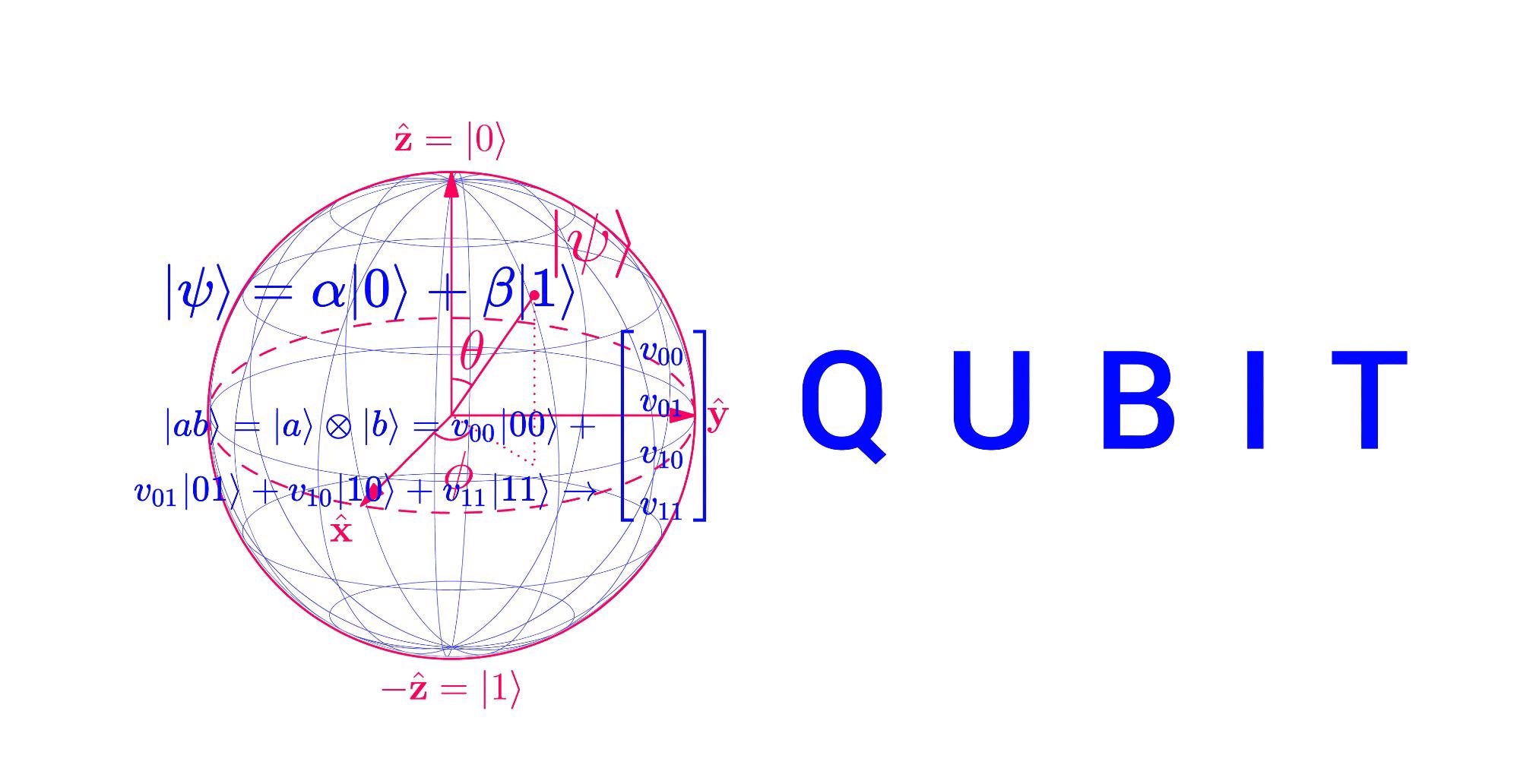
A qubit is the basic unit of information in a quantum computer — roughly equivalent to a bit in a classical computer, but far more powerful. While a classical bit can be either 0 or 1, a qubit can be 0, 1, or both at the same time thanks to a uniquely quantum effect called superposition.
This ability to represent multiple states simultaneously is what gives quantum computers their massive computational potential. It allows qubits to process a broader range of possibilities in parallel, providing an exponential increase in computational capability compared to classical bits for specific types of problems.
The Difference Between Bits and Qubits
To truly understand qubits, it helps to contrast them with classical bits — the building blocks of today’s computers.
- A classical bit can only exist in one of two definite states: 0 or 1.
- A qubit, however, can be in a combination of both states at the same time (superposition).
One way to visualize this is to think of a bit as a coin lying flat — it’s either heads (0) or tails (1). A qubit, instead, is like a spinning coin — until you measure it, it isn’t just heads or tails, it’s a mixture of both at once. This special behavior allows quantum computers to explore many solutions at the same time rather than one after another.
Superposition: The Core of Qubit Power
Superposition means that a qubit doesn’t have a single defined answer (0 or 1) until it’s observed. Until the moment of measurement, the qubit exists in a probability cloud of being both 0 and 1 in varying degrees — described mathematically by a “wave function.”
This doesn’t mean the qubit literally is both values at once in a classical sense; rather, it means the qubit reflects multiple possible outcomes simultaneously until measured. The power of quantum algorithms lies in orchestrating these probabilities so that the correct answer becomes much more likely upon measurement.
Entanglement: Linking Qubits Together
A second uniquely quantum concept is entanglement. When two qubits become entangled, their states become deeply interconnected — so much so that measuring one immediately affects the state of the other, even if they are physically distant.
Entanglement lets quantum computers create correlations that classical computers can’t easily replicate. With many qubits entangled, a quantum system can represent and manipulate enormous amounts of data in ways that would be infeasible with bits alone.
How Qubits Are Physically Realized
Unlike a classical bit, which is a simple on/off pulse of electricity, a qubit must rely on quantum mechanical systems that can maintain fragile quantum states. Several physical systems can serve as qubits — each with advantages and challenges in terms of speed, stability, and scalability.
Here’s how different types of qubits operate:
Superconducting Qubits
These qubits are made from tiny circuits that conduct current without resistance when cooled to near absolute zero. Their quantum states are created and manipulated using microwave signals. Superconducting qubits are currently one of the most mature and widely used technologies in experimental quantum computers.
They operate at extremely cold temperatures because heat introduces noise that destroys quantum behavior. Superconducting qubits are favored for their relatively fast operation but require large cryogenic systems — which is a barrier to practical deployment outside research settings.
Trapped Ion Qubits
Trapped ion qubits use individual charged atoms (ions) suspended in electromagnetic fields and manipulated with laser pulses. Because these ions can remain stable over relatively long times (a quality called coherence), they make excellent qubits for precision operations.
Their slower operation speed compared to superconducting qubits is often offset by their high fidelity — meaning they produce fewer errors in calculations.
Photonic Qubits
Photonic qubits use individual particles of light — photons — to carry quantum information through properties such as polarization. Photons are especially promising for quantum communication because they can carry quantum states over long distances with minimal loss.
Unlike other qubits, photonic qubits can operate at room temperature, making them attractive for future quantum networks and perhaps even general quantum computing systems if challenges around photon interactions can be addressed.
Quantum Dots and Other Exotic Systems
Other qubit technologies include quantum dots (tiny semiconductor structures that contain and manipulate single electrons) and neutral atoms controlled with lasers. Each system offers different tradeoffs in terms of coherence time, scalability, and ease of control.
Researchers continue exploring these options because no single qubit technology is perfect yet — and hybrid systems combining strengths from different types may be part of future quantum computers.
Quantum Gates: Operating on Qubits
Just as classical computers use logic gates to manipulate bits (like AND, OR, NOT), quantum computers use quantum gates to change qubit states. These gates — like the Hadamard gate or CNOT gate — manipulate the quantum state’s amplitude and phase, shifting probability distributions in ways that steer the computation toward desired results.
Quantum gates operate on the wave function of qubits and rely on precise control of their physical systems, such as applying laser pulses in trapped ion systems or microwave pulses in superconducting systems. Designing effective quantum circuits involves stringing together these gates to build algorithms such as Shor’s algorithm for factoring or Grover’s search algorithm.
Decoherence and the Fragility of Qubits
One of the biggest hurdles in real‑world quantum computing is decoherence — the tendency for qubits to lose their delicate quantum state due to interaction with the surrounding environment. Even tiny vibrations or thermal fluctuations can disturb qubit behavior, turning a useful superposition into random noise.
Maintaining quantum coherence for long enough to perform meaningful calculations requires extremely careful engineering — such as cooling systems, isolation from electromagnetic interference, and sophisticated error correction techniques.
Error Correction: Making Qubits Reliable
Because qubits are so fragile, quantum computers require quantum error correction to function reliably. Classical error correction uses redundancy (like repeating 0s and 1s), but quantum error correction must deal with both amplitude and phase errors without directly measuring — which would collapse the qubit’s state.
Sophisticated error correction schemes, such as the surface code, embed a logical qubit (an abstract error‑protected version) within many physical qubits to detect and correct errors without disturbing computation. Advances in this area are among the fastest‑moving parts of quantum research today, with recent progress in algorithms that can operate on conventional hardware as part of real‑time correction strategies.
Why Qubits Matter: Quantum Advantage and Beyond
The unique properties of qubits — superposition and entanglement — enable quantum parallelism, where many potential outcomes are processed simultaneously. In practice, this means quantum computers have the potential to deliver quantum advantage: outperforming classical computers for problems like chemical simulation, optimization, and cryptography.
For example, while a classical bit must explore paths sequentially to solve some complex problems, qubits can manipulate all possible states at once in a controlled manner and use interference to amplify the correct answer — a model that gives quantum computers fundamentally different capabilities for certain problem classes.
The Future of Qubits and Quantum Computing
In 2026, qubit research is rapidly advancing on multiple fronts. Novel qubit implementations are being developed that might allow larger and more reliable quantum computers, and error correction techniques are improving system stability and scalability. Meanwhile, innovations like 3D qubit wiring architectures aim to scale quantum processors to tens of thousands of qubits — a major milestone toward practically useful machines.
Even as researchers tackle engineering challenges — such as reducing heat and noise, improving coherence times, and building robust algorithms — the core idea remains the same: qubits unlock quantum behavior that transforms how computation is done.
Final Thoughts: Why Qubits Are Quantum Computing’s Heart
Understanding qubits is essential to grasping quantum computers because they are the engine that makes quantum computation possible. They combine strange and fascinating principles like superposition and entanglement to unlock computing power far beyond what ordinary bits can achieve.
Despite the challenges — fragility, cooling requirements, and error correction — researchers are making rapid progress toward practical quantum systems. As qubits become more stable, scalable, and integrated into real‑world devices, quantum computers could revolutionize fields from cryptography to materials science, optimization, and beyond.
Quantum computing remains one of the most fascinating frontiers in technology — and qubits are at its heart.
More Stories
Business News: The Surprising Trend Shaking Up Markets Now
Market Insights Unveiled: Navigating Trends Before They Trend
Future-Proofing Business: Innovation and Adaptation in a Rapidly Changing Economy