


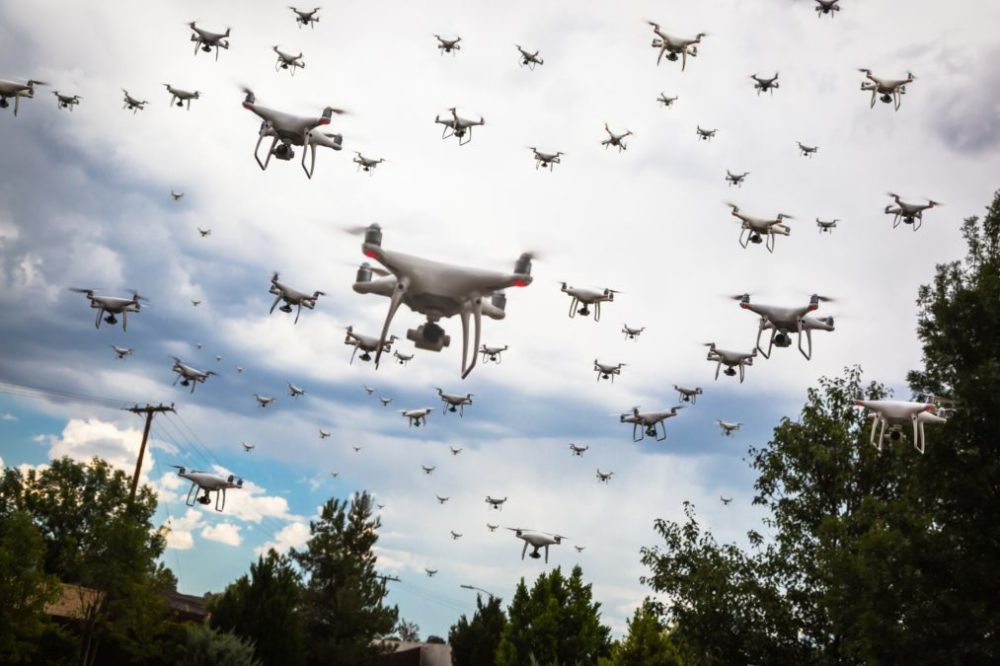
Pentagon’s Replicator 2026. The year 2026 marks a fundamental pivot in the history of warfare. For decades, the United States military relied on a “quality over quantity” doctrine—building a handful of billion-dollar, “exquisite” platforms like stealth bombers and nuclear carriers.
However, as of this year, the Pentagon has officially embraced the “Power of the Swarm.”
Through the Replicator Initiative, the Department of Defense (DoD) is flooding the battlefield with thousands of low-cost, autonomous, and highly coordinated drones.
This isn’t just a technological upgrade; it is a shift toward attritable warfare, where mass, volume, and artificial intelligence are the primary measures of lethality.
1. What is Replicator? The 2026 Status Update
First announced by Deputy Secretary of Defense Kathleen Hicks in 2023, the Replicator program was designed to counter peer adversaries (specifically in the Indo-Pacific) by fielding “thousands of autonomous systems” within an ambitious 18-to-24-month window.
As we reach the mid-point of 2026, the program has evolved into two distinct pillars:
- Replicator 1: Focused on the offensive massing of small, smart, and cheap drones across air, land, and sea.
- Replicator 2: Launched in late 2024 and hitting full stride in 2026, this phase focuses on Counter-UAS (C-UAS)—protecting U.S. installations and troops from the very drone swarms the U.S. is now perfecting.
2. Replicator 1: Building the “Wall of Drones”
In 2026, the Pentagon has moved beyond prototypes. The goal is to create a “tactical hellscape” for any adversary attempting to cross contested waters or airspace.
Key Technologies of 2026:
- The Orchestrator Challenge: In early 2026, the Defense Innovation Unit (DIU) launched a $100 million challenge to find “vehicle-agnostic” software. The goal is simple but revolutionary: allow a single human operator to command hundreds of different drones from various manufacturers using plain language commands rather than manual joysticks.
- Switchblade 600 & Beyond: The U.S. Army has integrated advanced loitering munitions that can “loiter” over a target area for over 40 minutes, communicating with other drones to identify the highest-value targets before striking in a coordinated “diving” maneuver.
- Autonomous Surface Craft: It’s not just in the air. Replicator has successfully deployed “USVs” (Unmanned Surface Vehicles) like the BlackSea Global Autonomous Reconnaissance Craft (GARC), which act as a distributed sensor net across the Pacific.
3. Replicator 2: Defending the Homeland
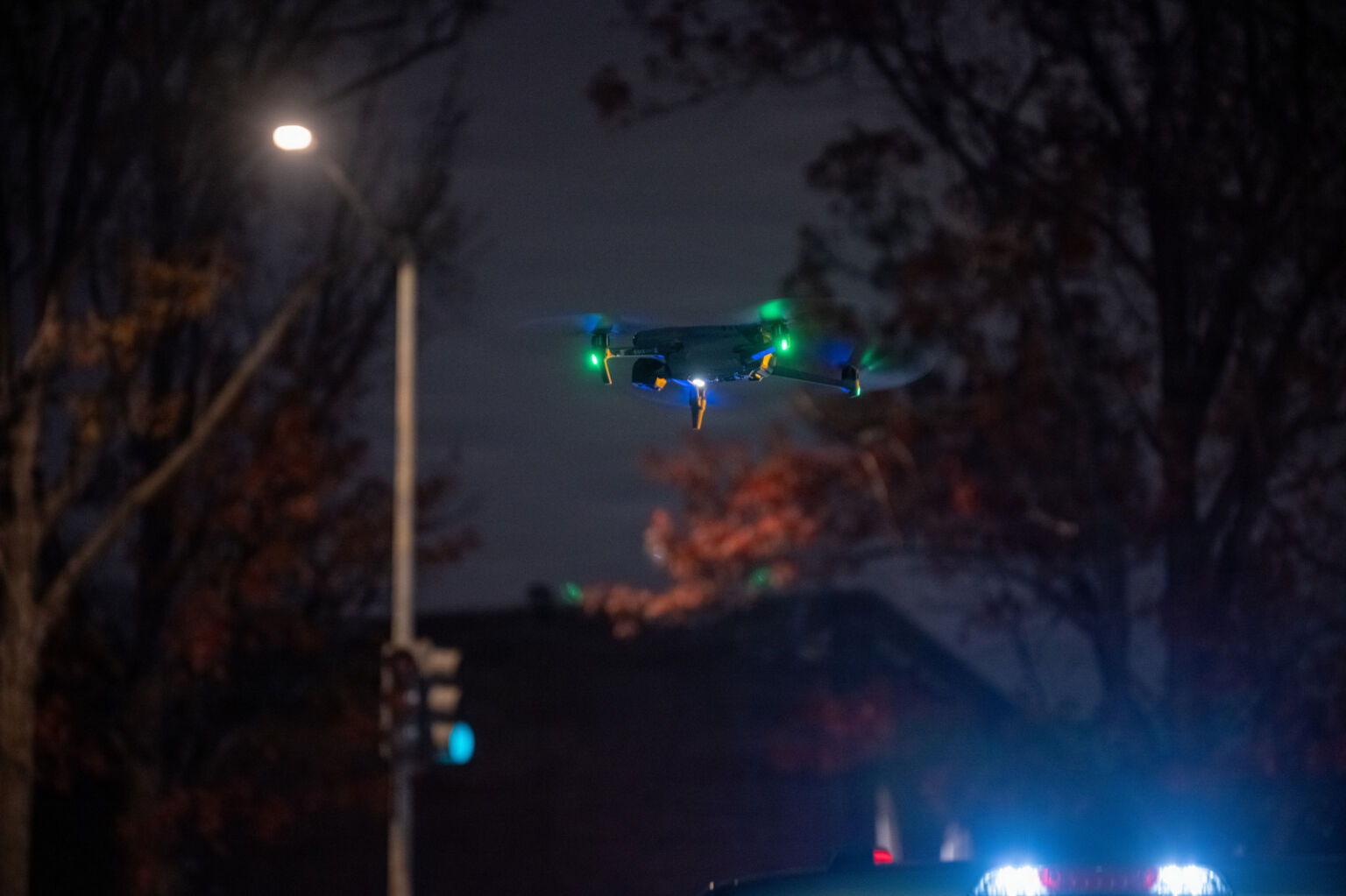
If 2025 was the year of the swarm, 2026 is the year of the shield. With the proliferation of cheap FPV (First Person View) drones globally, the Pentagon has prioritized Replicator 2.0 to defend critical infrastructure and military bases.
The Rise of the DroneHunter
In January 2026, the Joint Interagency Task Force 401 announced the first major purchase under Replicator 2: the DroneHunter F700.
- The Concept: Rather than using million-dollar missiles to shoot down $500 drones, the DroneHunter is a reusable “interceptor” drone.
- The Tactic: Using AI and onboard radar, it tracks hostile drones and captures them in a tethered net, safely towing them away for forensic analysis without the risk of “collateral damage” in populated areas.
4. The “Blue UAS” Marketplace: Procurement at 2026 Speed
One of the biggest successes of the Replicator era is the death of “glacial” bureaucracy. Traditionally, buying military hardware took years; in 2026, it takes days.
The Blue List Unmanned Aircraft Systems website officially transitioned to the Defense Contract Management Agency (DCMA) in early 2026. It operates as a “military Amazon,” allowing field commanders to bypass red tape and purchase pre-vetted, secure, and encrypted drones within 48 hours. This e-commerce model ensures that the tactical edge stays with the soldier, not the paperwork.
5. Lessons from Ukraine: Mass vs. Exquisite
The Pentagon’s urgency in 2026 is driven by data from the frontlines in Ukraine. While the U.S. previously focused on $100,000 reconnaissance drones, Ukraine demonstrated that $500 FPV kamikaze drones could destroy $5 million tanks.
The 2026 strategy acknowledges that “Mass is a Capability.” Even if a swarm is 50% less capable than a single high-end jet, a swarm of 1,000 drones is significantly harder to stop, creates more cognitive load for enemy sensors, and is fundamentally “expendable.” If you lose ten drones but destroy a radar array, the trade-off is a victory.
6. The Challenges of 2026: Technical Snags
The road to autonomous dominance hasn’t been without its potholes. Reports in early 2026 have highlighted a few “teething” issues:
- Software Friction: In large-scale Pacific drills, drones from different vendors sometimes struggled to “talk” to each other once they moved beyond the operator’s line of sight.
- Supply Chain Resilience: Moving to mass production requires a massive amount of chips and batteries. The Pentagon is currently pushing for “Civil-Military Fusion” to tap into commercial robotics and battery tech to avoid reliance on foreign supply chains.
Conclusion: The Future of Deterrence
By the end of 2026, the Replicator program will have fundamentally changed the “cost of war.” For the first time, a military power is not just measuring strength by the size of its hulls or the speed of its jets, but by the complexity and scale of its digital swarms.
As Replicator 1 provides the “sting” and Replicator 2 provides the “shield,” the Pentagon is betting that this high-volume, AI-driven approach will be enough to deter a major conflict before the first drone even takes flight.
More Stories
Business News: The Surprising Trend Shaking Up Markets Now
Market Insights Unveiled: Navigating Trends Before They Trend
Future-Proofing Business: Innovation and Adaptation in a Rapidly Changing Economy